In the previous chapter, we met Nell from the Orange Star Army and proceeded with Field Training to issue troop orders. During the Training, we fought against Olaf’s infantry in the Alara region, and we successfully defeated them. What will happen this time?

Welcome back! In this Field Training, we will focus on terrain and its impact on gameplay. Terrain is a critical factor in Advance Wars, affecting unit movement, defense, and strategy. Let’s dive in!
THE BRIEFING
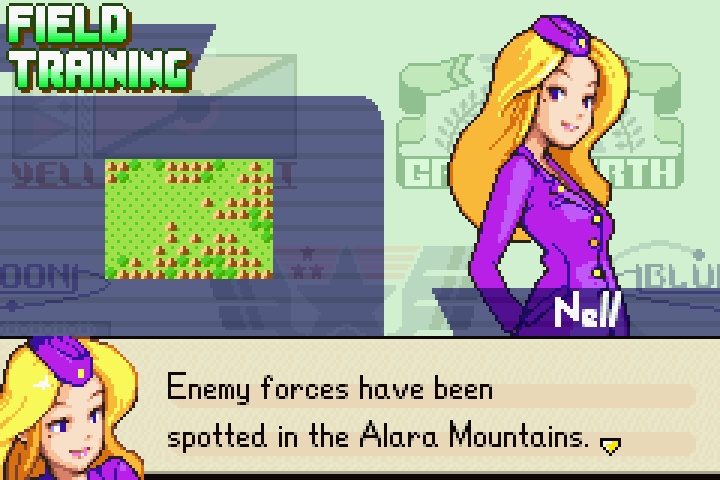
Their HQ is in another area, so we believe this is a covert attack.

A covert attack… that sounds like something Olaf would try.
Olaf? A covert attack? What are you talking about? Are we talking about the same Olaf?
Your goal is to take out these units. You’ve been given four infantry units to carry out this operation. Let’s go!

Day 1
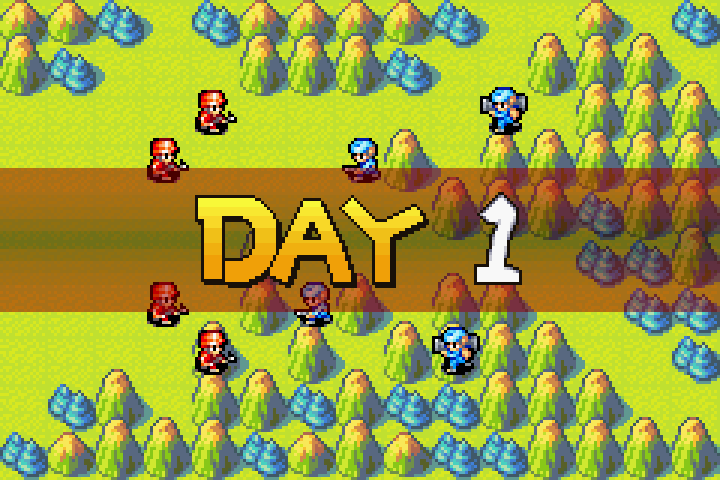


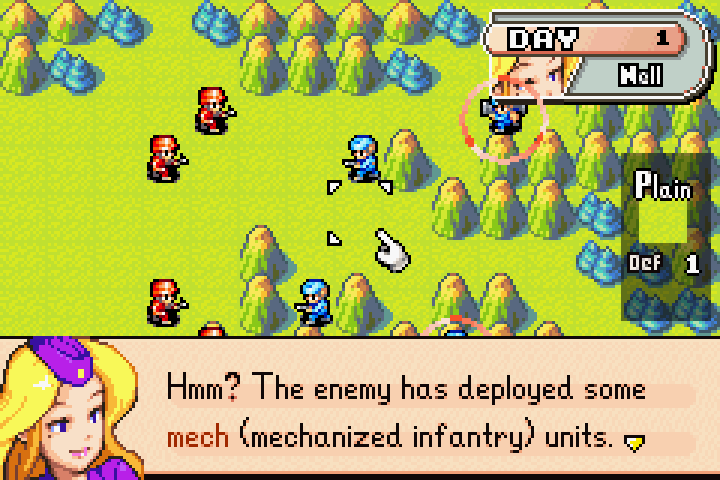
This could be trouble… Mech units have more firepower than your standard infantry do. You won’t be able to defeat mech units in direct combat. So you’ll have to use the terrain to give you some defensive cover.
Actually, infantry deals 45% base damage to mechs, and mechs deal 65% base damage to infantry, so there is some wiggle room. If we get the first hit, we should be fine. Anyway, here are the mech’s stats.
INTEL — MECH
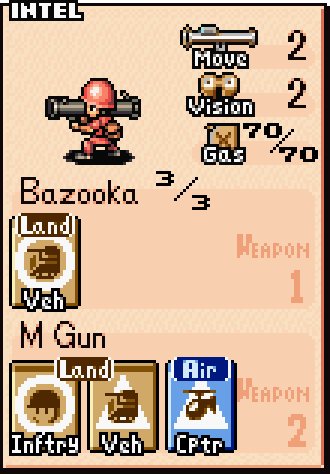 Somehow, mechanized infantry is slower than normal infantry, but who am I to judge. A mech is a 3,000G unit that is basically an upgraded version of normal infantry in terms of firepower, but slower. Armed with a bazooka in addition to a machine gun, mechs pack quite a punch even against armored vehicles. However, they can only fire the bazooka three times before they need to be resupplied. Combined with the fact that they have a movement range of only 2, this makes them unlikely to get the first hit on a target, so mech positioning becomes quite important to make the 3,000G cost worthwhile.
Don’t get me wrong; mechs are still a great unit. They have their own unique movement type, which matters for terrain like mountains. Mountains cost 2 movement for infantry and only 1 for mechs, so mechs and infantry can travel the same distance there! There is also a strategy called “Sami mech spam,” where the player uses the CO Sami and produces a lot of mechs to overwhelm the enemy. Sami provides a boost to infantry and mech firepower and capture rate. Her CO Power further boosts their firepower and movement, making this strategy quite potent.
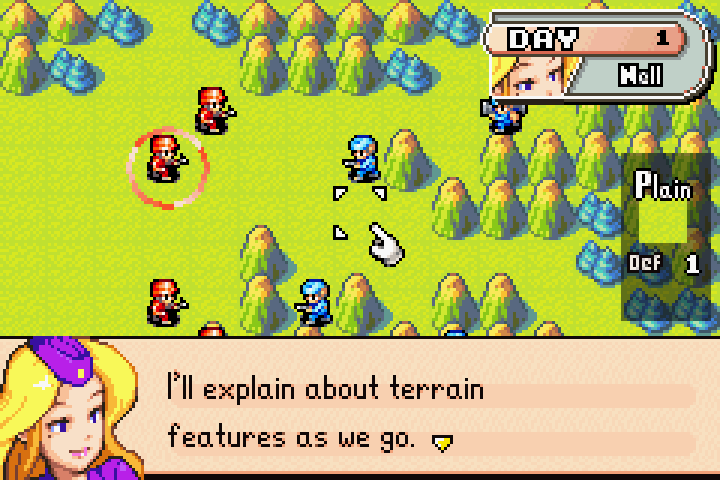
Select this infantry unit, please.
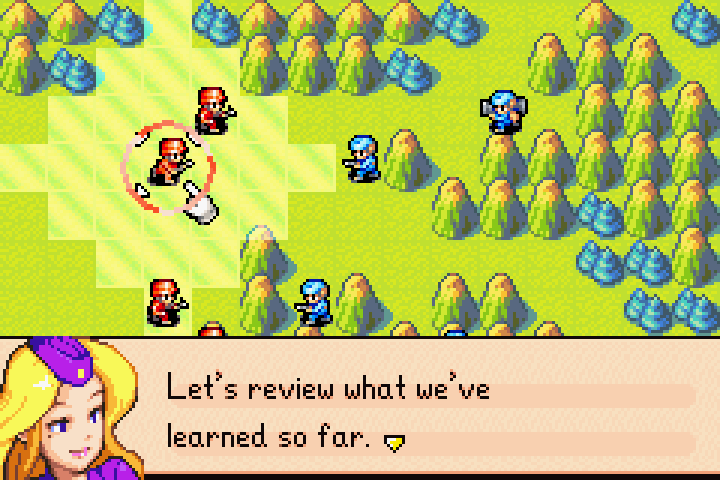
Order this infantry unit to Fire.
Well, there’s only one spot that infantry can move to and fire from, so let’s do that.
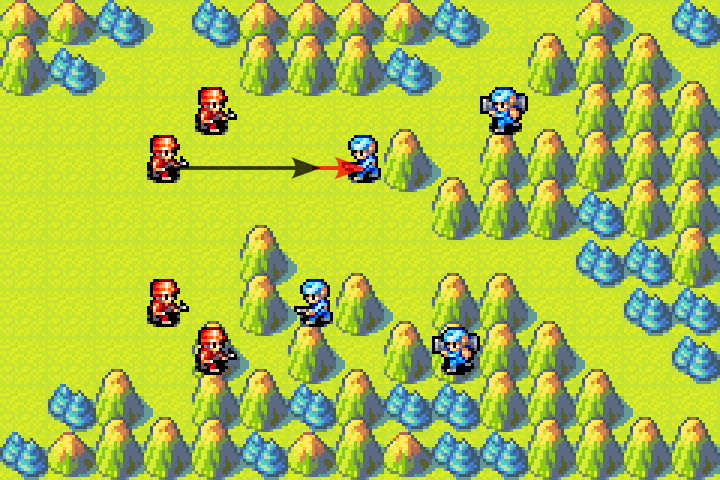
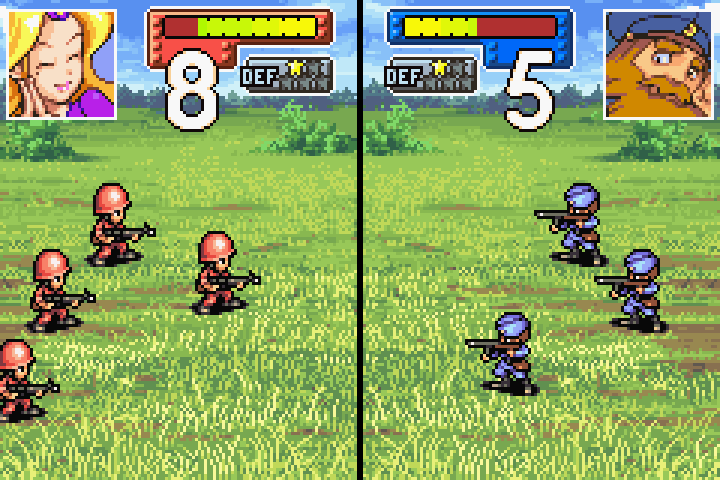
Excellent!
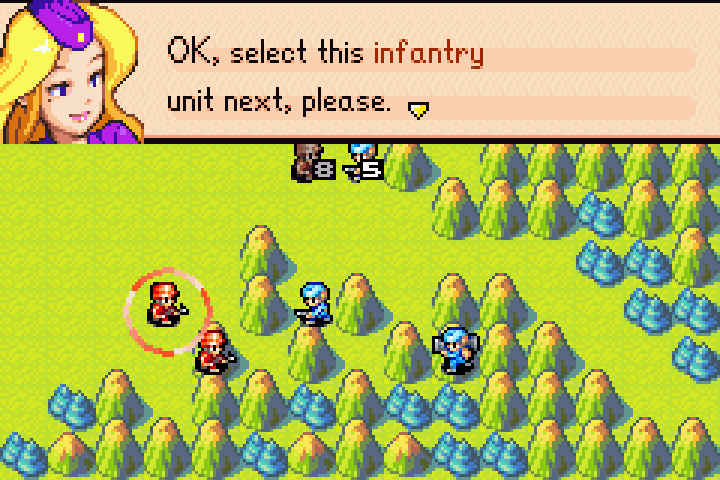
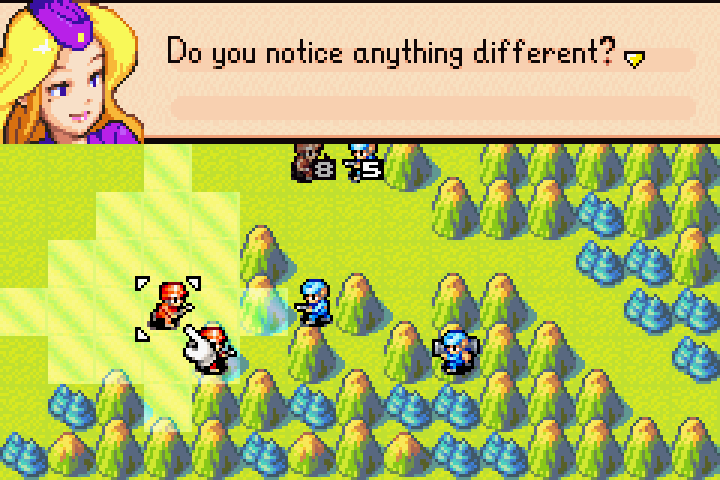
Up ’til now, the highlighted movement area for infantry was three spaces.
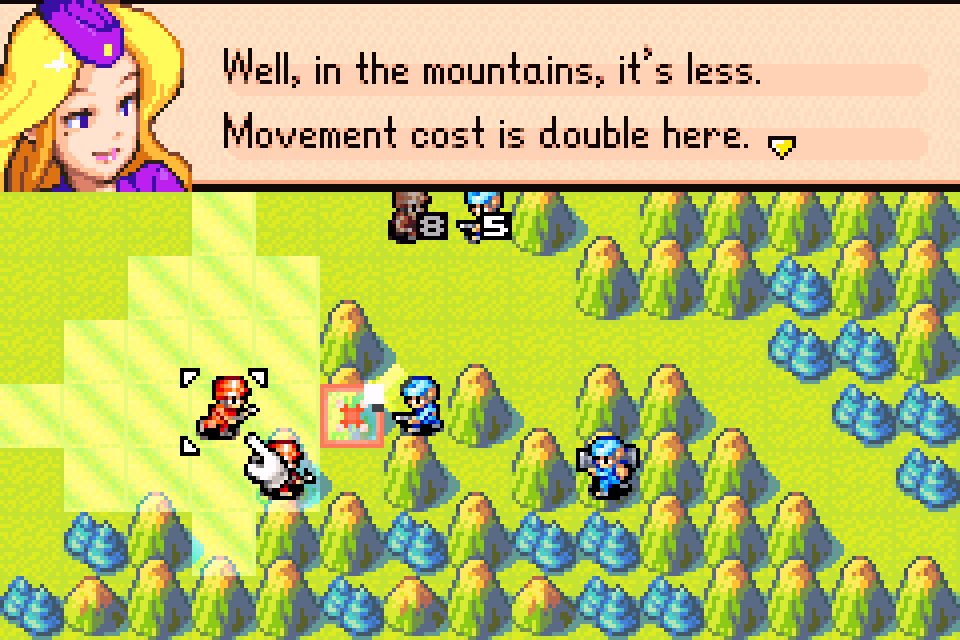
This means your movement rate will be half of that on the plains. Do you think that means you should avoid mountains?
Depends on the situation. It always depends.
That would be a very serious tactical error. Mountains offer advantages that compensate for movement cost.
As they say, all armies prefer high ground to low, but there are exceptions to every rule.
You’ll understand once you Fire on the enemy. Go ahead. Engage the enemy and Fire!
Oh trust me, I understand. But in this case, I do agree with you. Let’s Fire on the enemy.
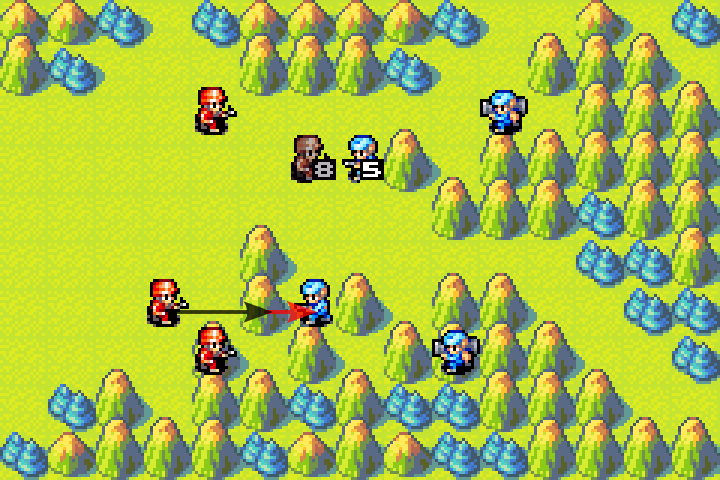
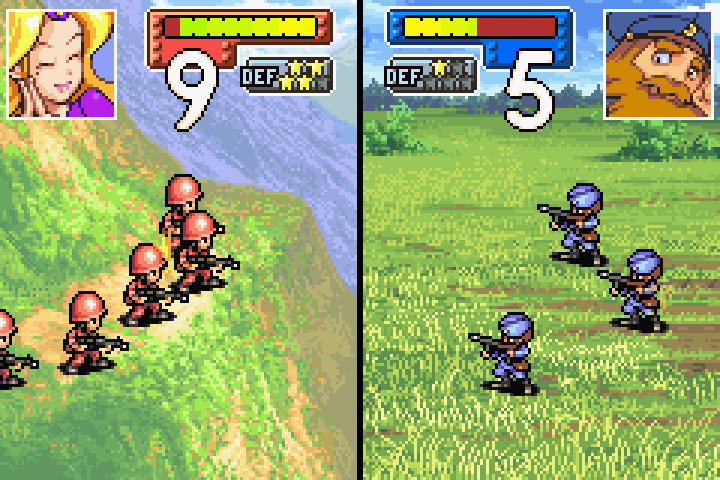
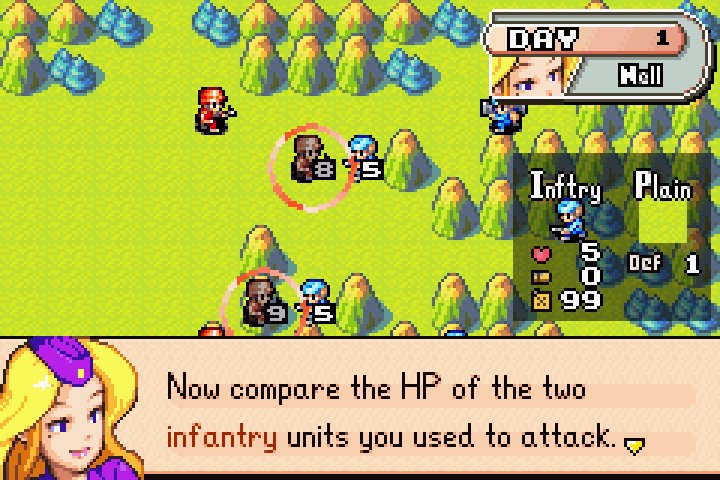
The last unit took less damage than the first unit, didn’t it? This is because of another terrain feature called defensive cover.
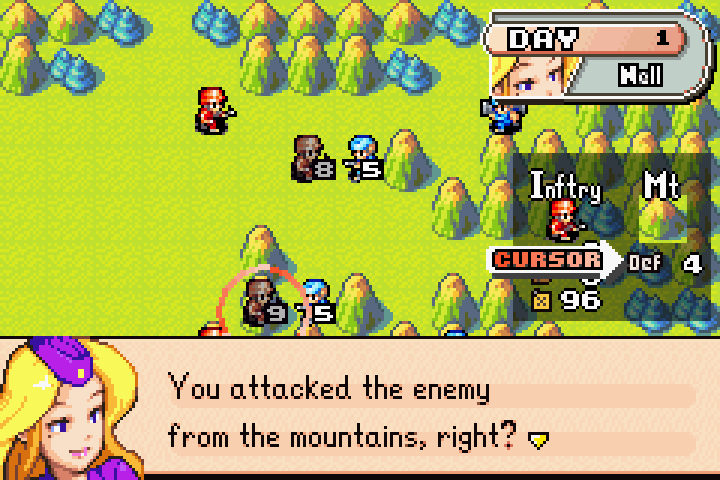
Defensive cover in the mountains is this number here… a four.
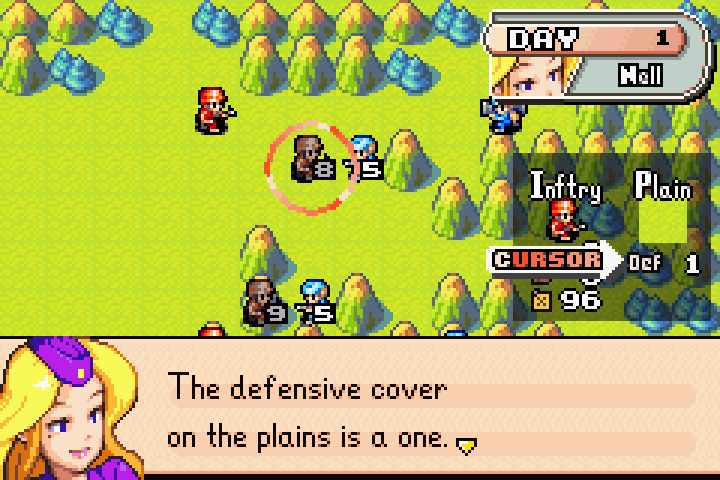
The higher the defensive cover rating is, the less damage you’ll take. Is that clear?
Yes, ma’am!
Good! I knew you were a quick study. Go ahead and Fire on the remaining infantry units. Select End when you’re finished.
INTEL — TERRAIN
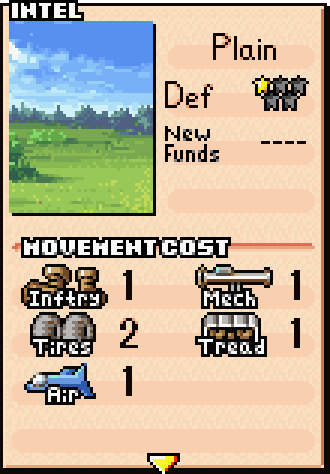
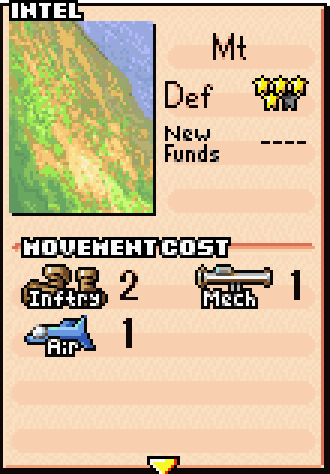
The way terrain defense works in this game is that it reduces incoming damage by star count × unit HP. For example, a full-HP unit standing on mountains will block 4 × 10 = 40% of the incoming damage. A 5 HP unit standing on mountains will block 4 × 5 = 20% of the incoming damage. That’s a lot of damage reduction!
In fact, mountain defense is so good that units on mountains can get what I like to call a “reverse first strike.” Normally, the first player to attack has the advantage because they deal more damage before the enemy can counterattack. However, in this case, an infantry unit attacking another infantry unit on a mountain can actually deal less damage than it takes from the counterattack, making it a highly unfavorable action.
Mountains have some of the highest defense in the game, tied with the HQ, which we’ll see in the future.
Mountains are also only accessible to infantry, mech, and air units. They cost 2 movement points for infantry, but only 1 movement point for mechs. Since mechs have a movement range of 2 while infantry has a movement range of 3, mechs can actually cross mountains more efficiently.
Air units, on the other hand, don’t gain any benefits from terrain, so they don’t get the 4-star defense boost.
There’s one more thing mountains do for vision, but we’ll talk about that in the future when it becomes relevant.
Plains, on the other hand, are pretty standard, with 1 defense star and a 1 movement cost for everything except vehicles with tires.
I guess you could say they’re plain. Ba-dum-tss.
Now, let’s move the rest of the infantry units up and fire per Nell’s instructions.
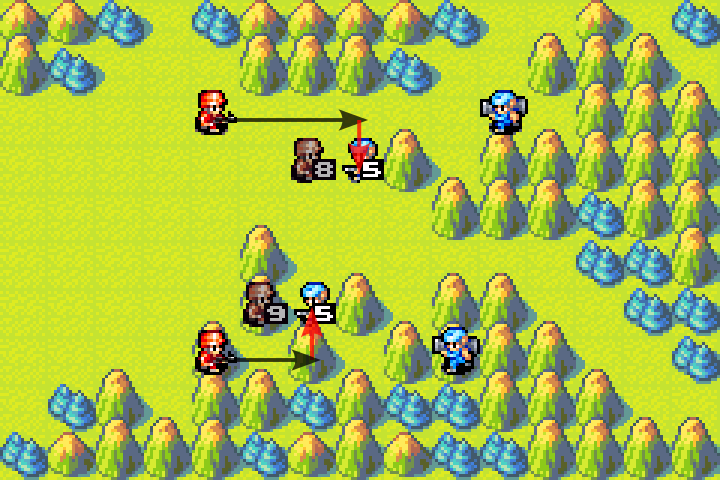
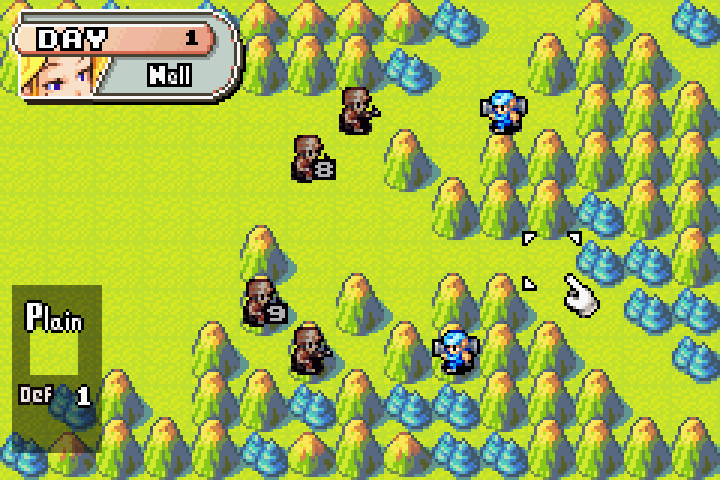
There, we’ve created a two-to-one advantage again, even though Olaf had a superior army this time. How did we end up in this situation? Besides attacker advantage and concentration of force, there is also first-turn advantage.
INTEL — FIRST TURN ADVANTAGE
First-turn advantage is common in all turn-based games where, usually, whoever gets to make the first move has an advantage. On rare occasions, usually depending on the map or rules, second-turn advantage can happen as well.
It’s similar to Attacker Advantage, but it is more about the first player to act having the advantage. In this case, we had First Turn Advantage because we were able to attack Olaf’s infantry before he could move them away.
If Olaf had his turn first, he could have pulled the infantry away and moved them closer to the mechs before we could attack them. It would have been a difficult battle to win if that had happened.
ENEMY Day 1
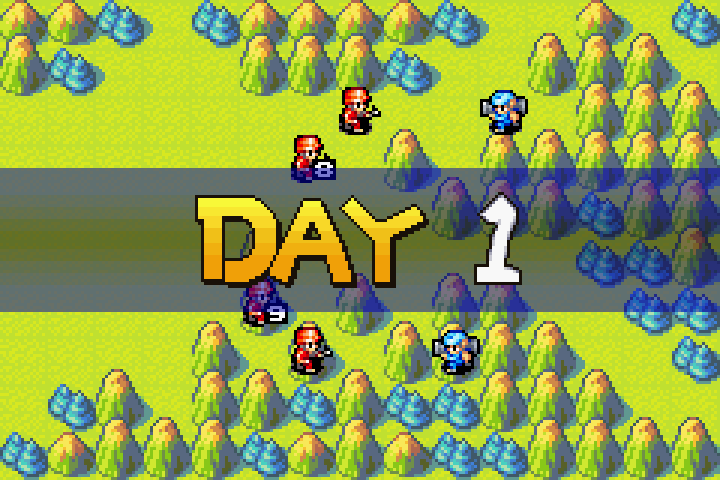
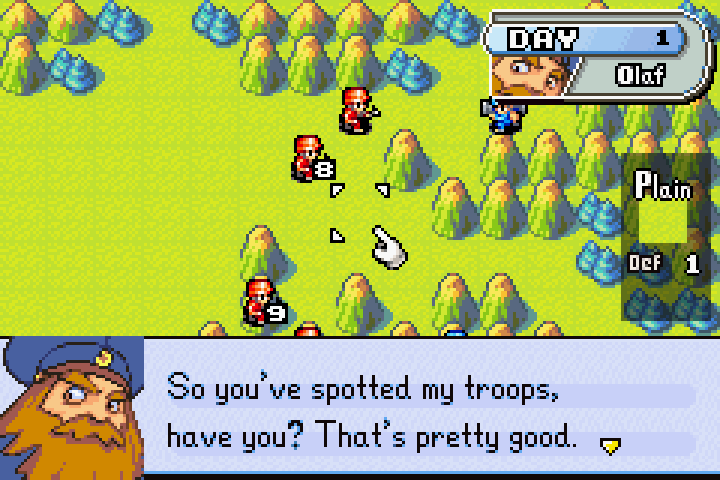
But this time… heh heh heh… things will be different! You’ll learn what it means to face mech units! I’ll just keep watch from back here. No need for me to actually be in the field. I’m still in charge, though!
Ditto! I’m just watching behind the safety of the screen, but I’m still in charge!
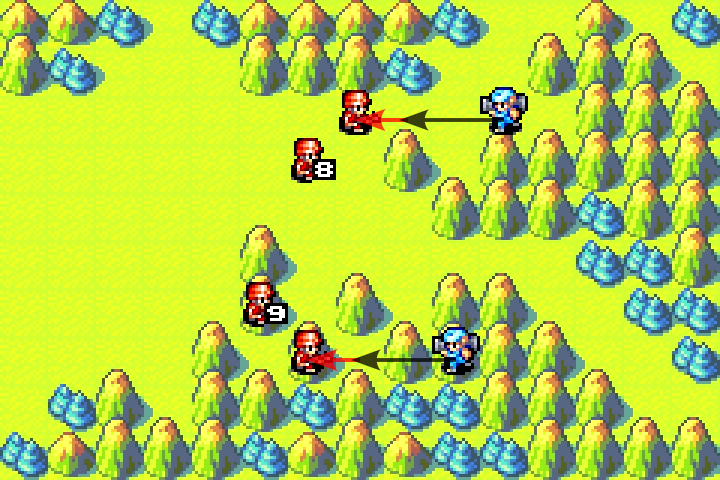
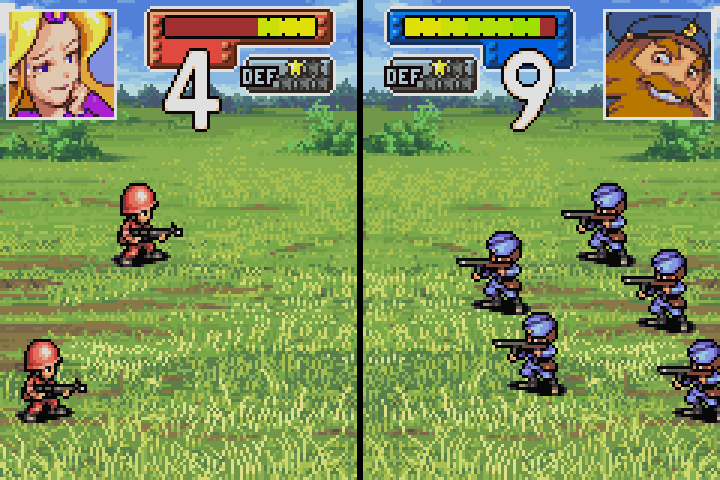
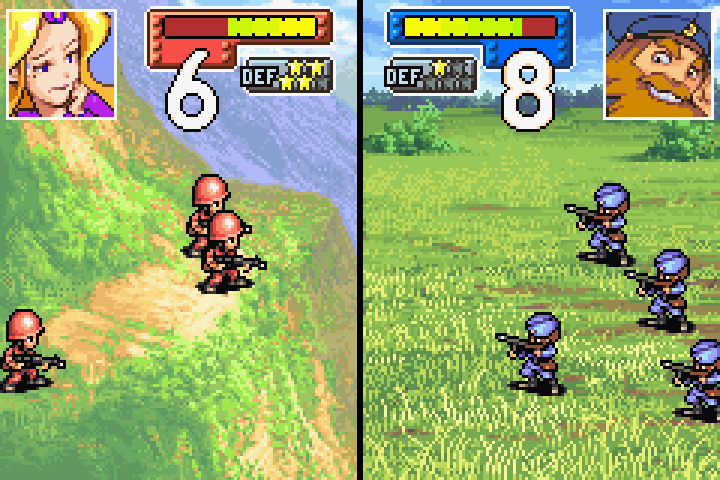
Eek! That’s some damage we took. As you can see, infantry is no match for a mech on equal terrain when the mech gets the first hit. The infantry on the mountain fared much better and survived with more HP, so it can definitely still fight back!
I also find it interesting that on the first day, Nell forces you to kill Olaf’s Infantry, which puts both of your own Infantry in range of Olaf’s Mechs. They also happen to end up on different terrain, neatly showcasing the terrain defense modifier. It’s almost like the map and the scripting purposefully set it up!
It’s also worth noting that even though we lost more HP during Olaf’s attack, the unit values mean we actually came out about even in terms of value lost.
Day 2
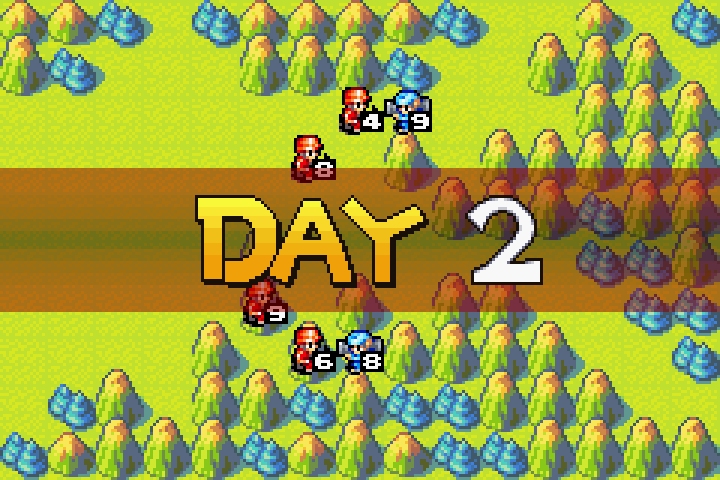
It’s your turn. Mech units really pack a punch, don’t they?
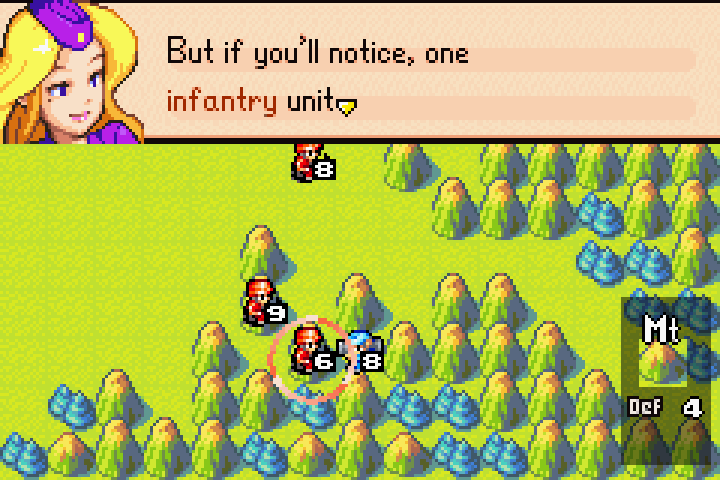
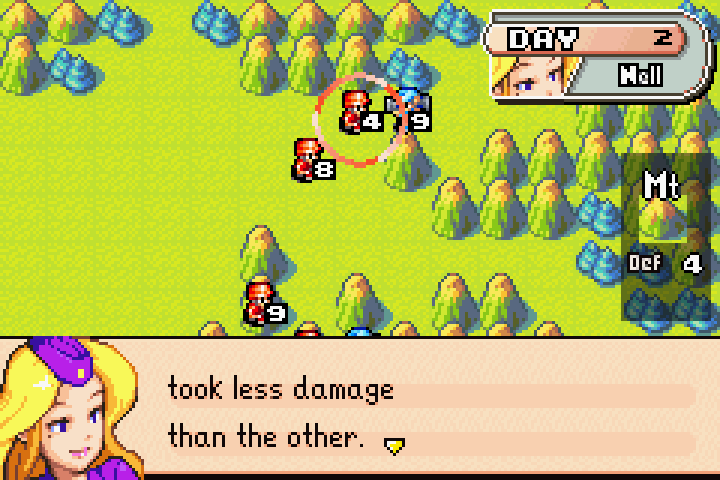
Do you know why?
I kind of just explained it though… But I’ll bite. Why?
It’s because of superior defensive cover. Remembering this is vital. You should also keep in mind that movement cost differs between units.
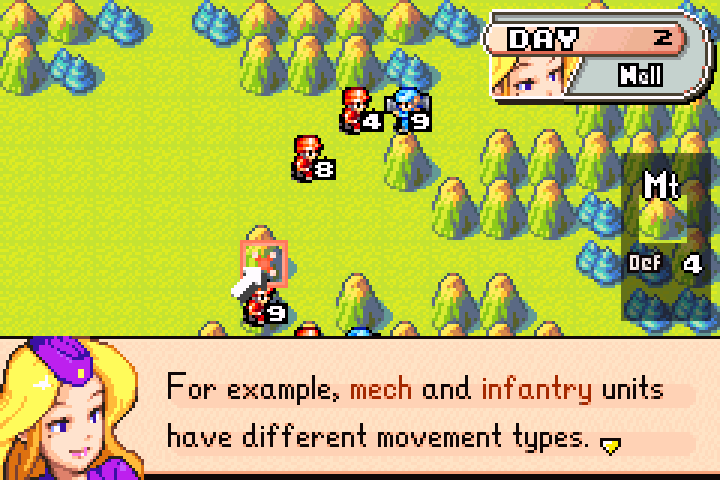
So, their respective movement costs in mountains are two and one.
This is in fact a very important point. It also ties into map design, which is a topic for another time. But in short, movement is very important in Advance Wars.
When you need intel like this, place the cursor on a space and press the R Button. This works for terrain features, as well as for all unit types. So, for intel on unit movement type, cost, etc., remember the R Button. Well, I’ll leave the rest of this battle to you. They may have mech units, but you have superior numbers! Focus on what you’ve learned: use it well, and victory will be yours!
Finally! I can actually play the game. Although there’s not much strategy to discuss, since, as Nell said, we’ve already overwhelmed Olaf’s forces, we can just keep attacking his mechs until we wipe them out.
Remember the lesson from our previous training: attack with the healthier unit first to reduce counterattack damage!
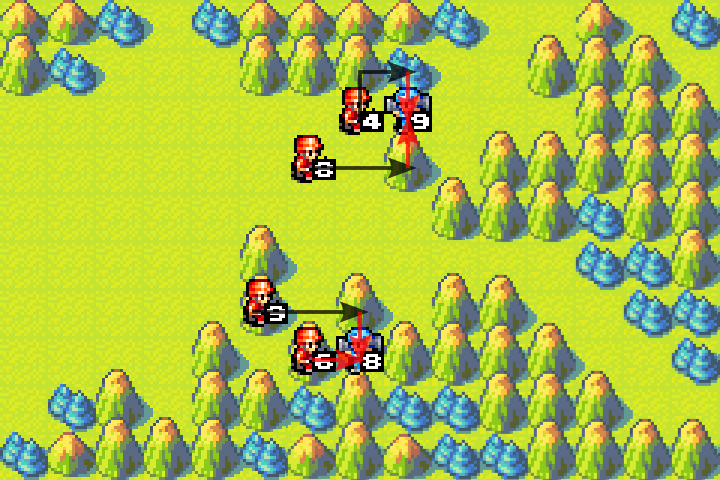
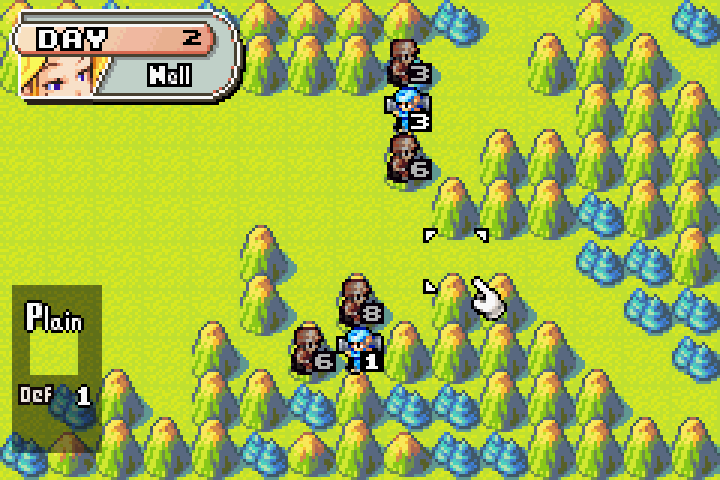
If you haven’t been convinced of how important terrain is yet, this should convince you. The northern squads fought on plains, and later on mountains and forests, while the southern squads fought on mountains.
With everything else being equal, the northern squads lost a total of 11 combined HP and dealt 17 damage. Meanwhile, the southern squads lost only 6 combined HP while dealing 19 damage.
That’s a significant difference!
INTEL — WOOD
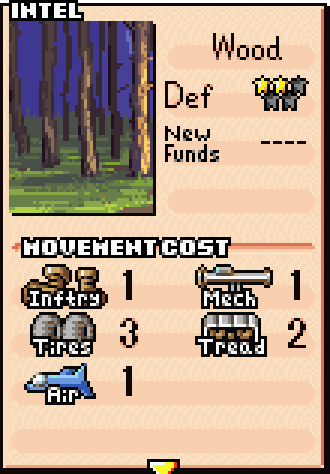
Wood is the most common difficult terrain and is accessible to almost every unit except naval units. It provides a decent defense bonus of 2 stars, but it slows down every unit except air units, infantry, and mechs.
When moving, you generally want to avoid woods because of the movement penalty. However, once you’re ready to fight, you actually want your units stationed in woods. They provide some of the best defense available outside of buildings and HQs.
Similar to Mountains, Woods are also especially important in Fog of War maps. We’ll talk more about that in the future when we play a Fog of War map.
Now then, let’s see what Olaf’s Mechs can do with only 3 and 1 HP remaining.
Enemy Day 2
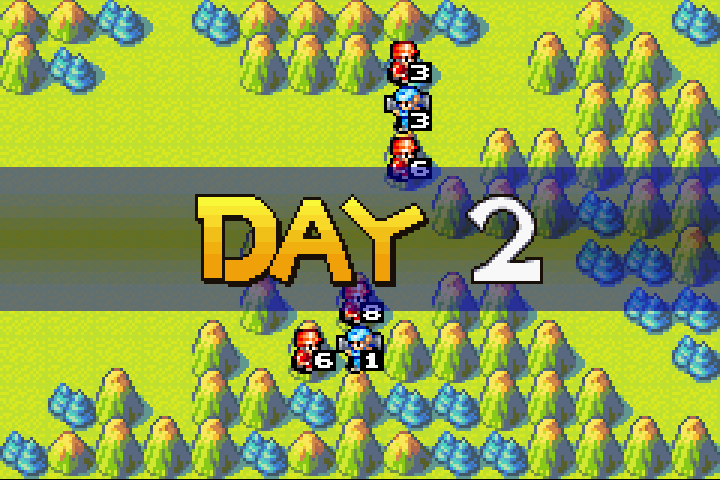
Olaf did absolutely nothing. He didn’t attack or retreat. He literally just ended his day and passed it back to us. I know Olaf said he’s just keeping watch, but come on, at least put in some effort!
Day 3
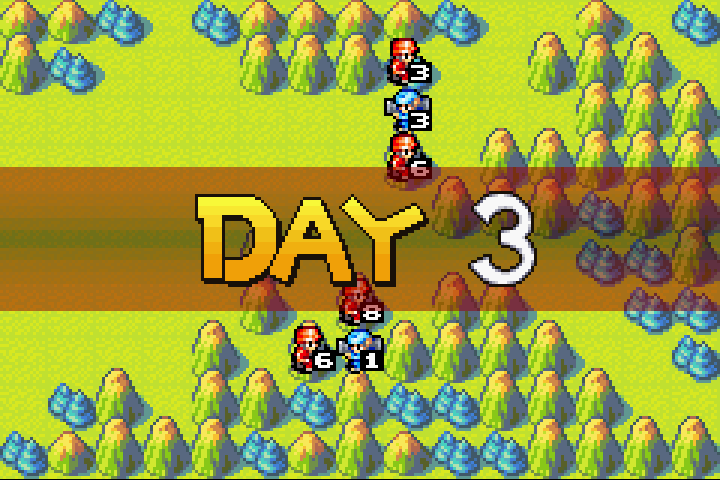
This is basically over. We can just clean up the rest of Olaf’s units and call it a wrap.
Oh, one more thing. If at any point during the battle you need to stop, there’s a way to save. Saving will prevent you from having to start the same mission over again. Please go to the Map Menu now. Place the cursor on an empty space and press the A Button.
Oh, come on now, Nell. I didn’t know you could pause during a war!
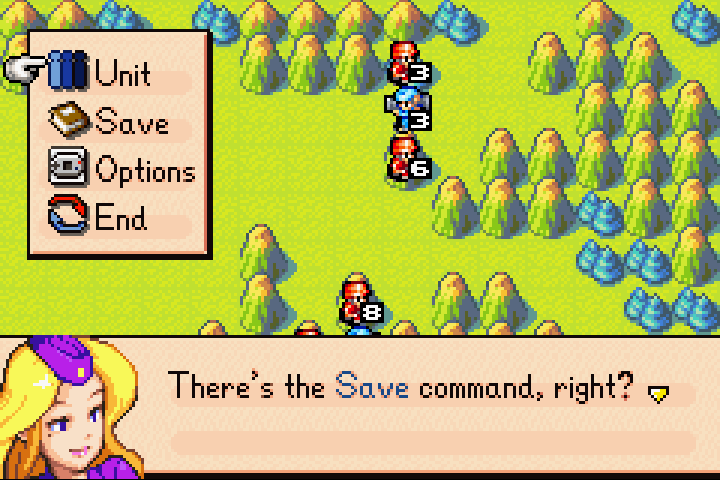
This will allow you to Save your progress during a battle. Use this whenever you need to take a break from a mission. I’ll let you decide whether or not to save at this point. Ok, just a little more work here, and you should defeat Olaf. Don’t let your guard down, though. Good luck and move out!
What do you mean, don’t let my guard down? Olaf’s mechs literally have only 4 combined HP left, and they aren’t doing anything! Let’s just wrap it up now.
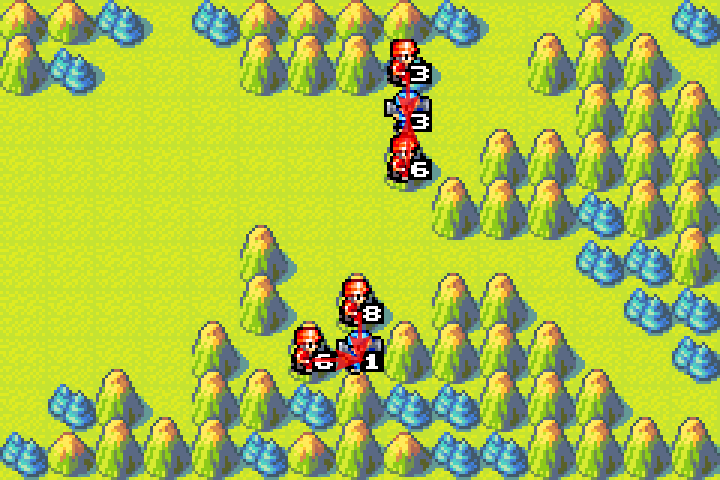
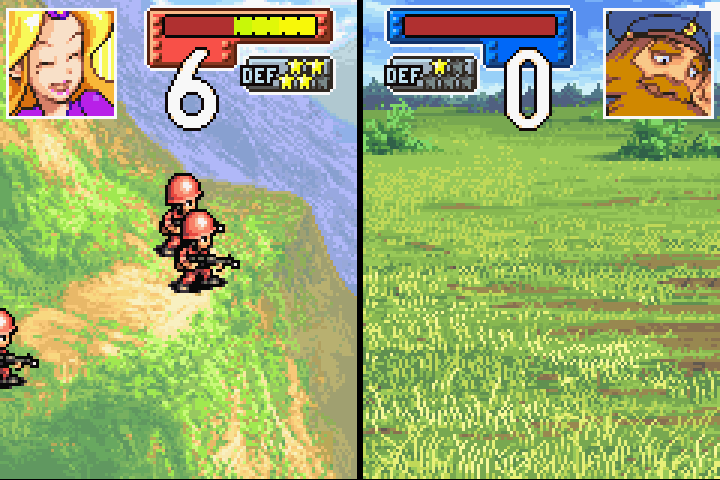
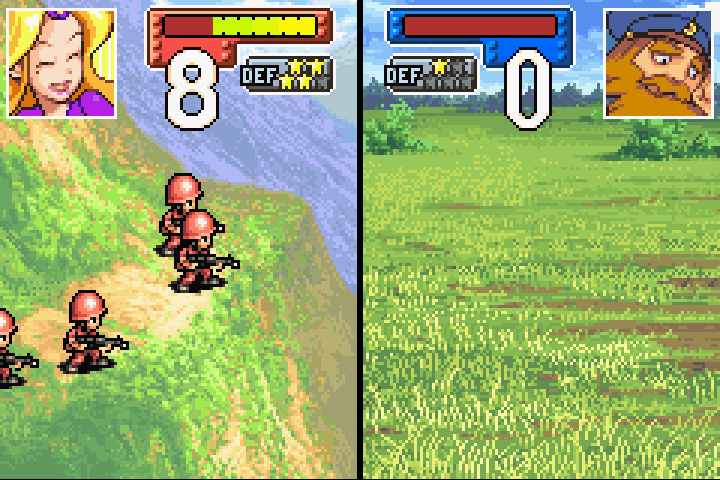
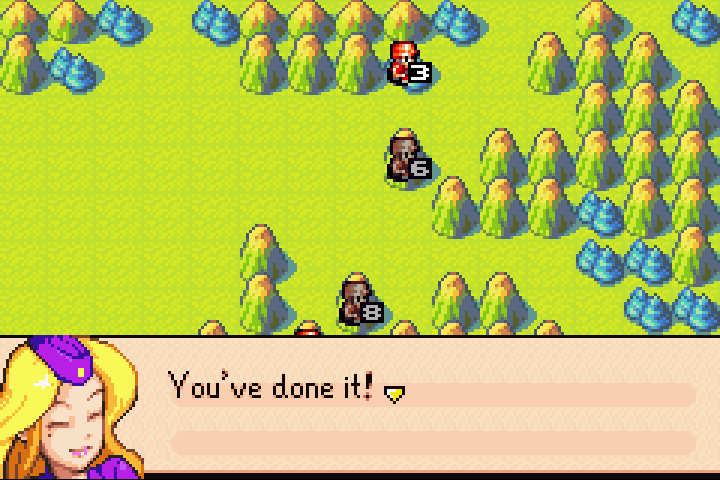

These units really were on a covert operation. Thanks to your planning, our troops took minimal damage. Keep up the good work!
Aargh! Another failure! After all of my careful planning, another botched mission! Grrr… Next time, I will prevail!
I don’t know what you were expecting, Olaf. If this is your careful planning, I don’t see you winning ever!
RESULTS

So, to recap, we learned how terrain works in this chapter and used it to our advantage. We also learned the concept of first-turn advantage and defeated two of Olaf’s infantry units and two of his mechs, thwarting Olaf’s covert mission.
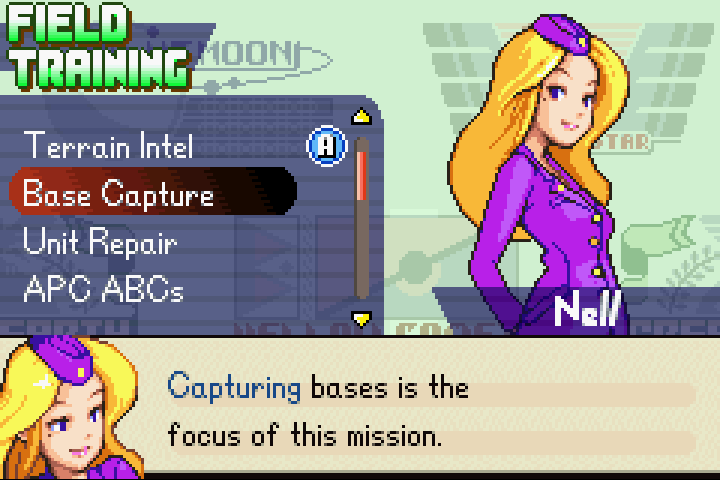
Next time, we’ll look into capturing bases, and learn what kind of benefits that provides!
LOADING TRANSMISSIONS…